North End Real Estate Guide: Historic, Walkable City Living for Young Professionals
Explore North End’s historic village vibe: 99 Walk Score, 10–15 min Financial District walks, $1,090/sq ft condos and 4 nearby MBTA lines.
Written ByTyler Smith
PublishedNovember 5, 2026
Beacon & Bond Group helps buyers and sellers in Boston, Brookline, Newton, Needham, Dedham and Milton. More than 80 clients served since 2020. Let's talk about your plans. Serving Boston, Brookline, Newton, Dedham, Needham and Milton, MA.
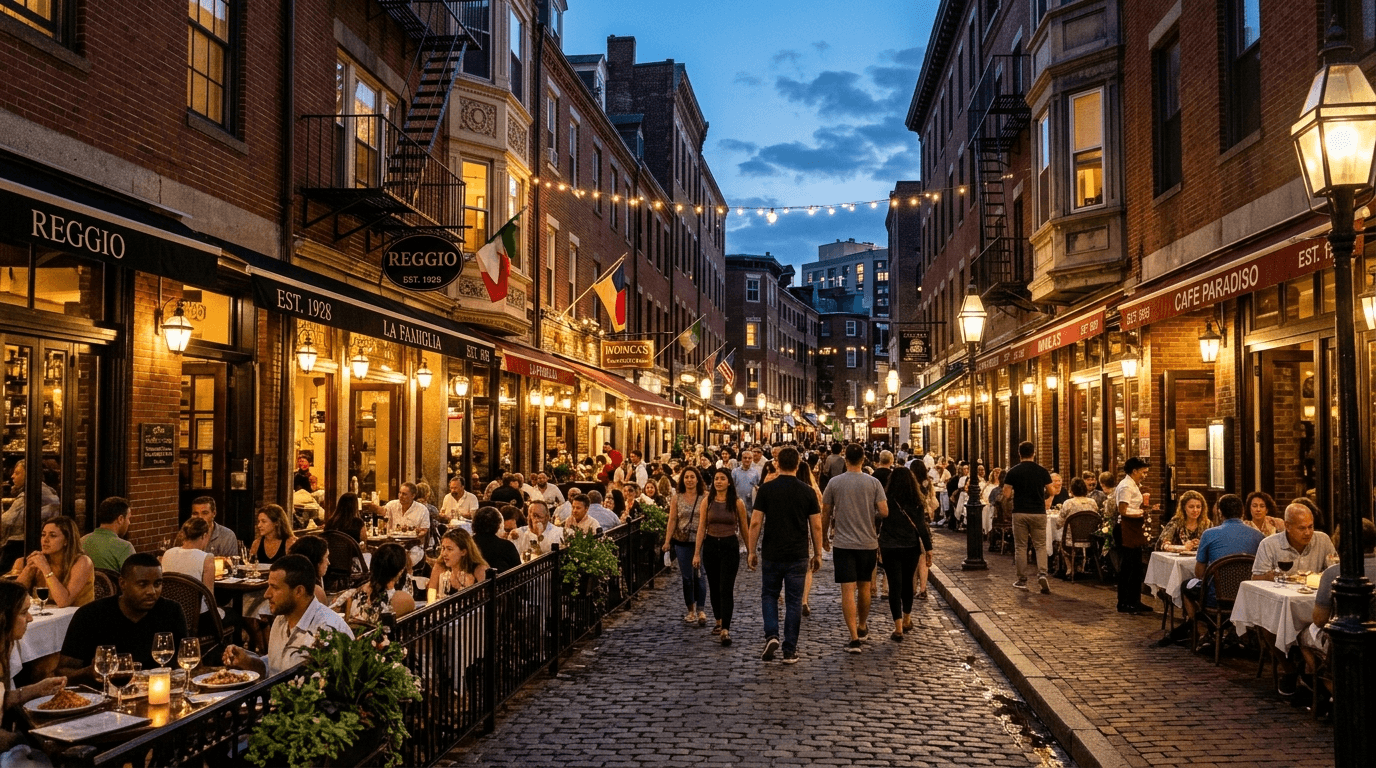
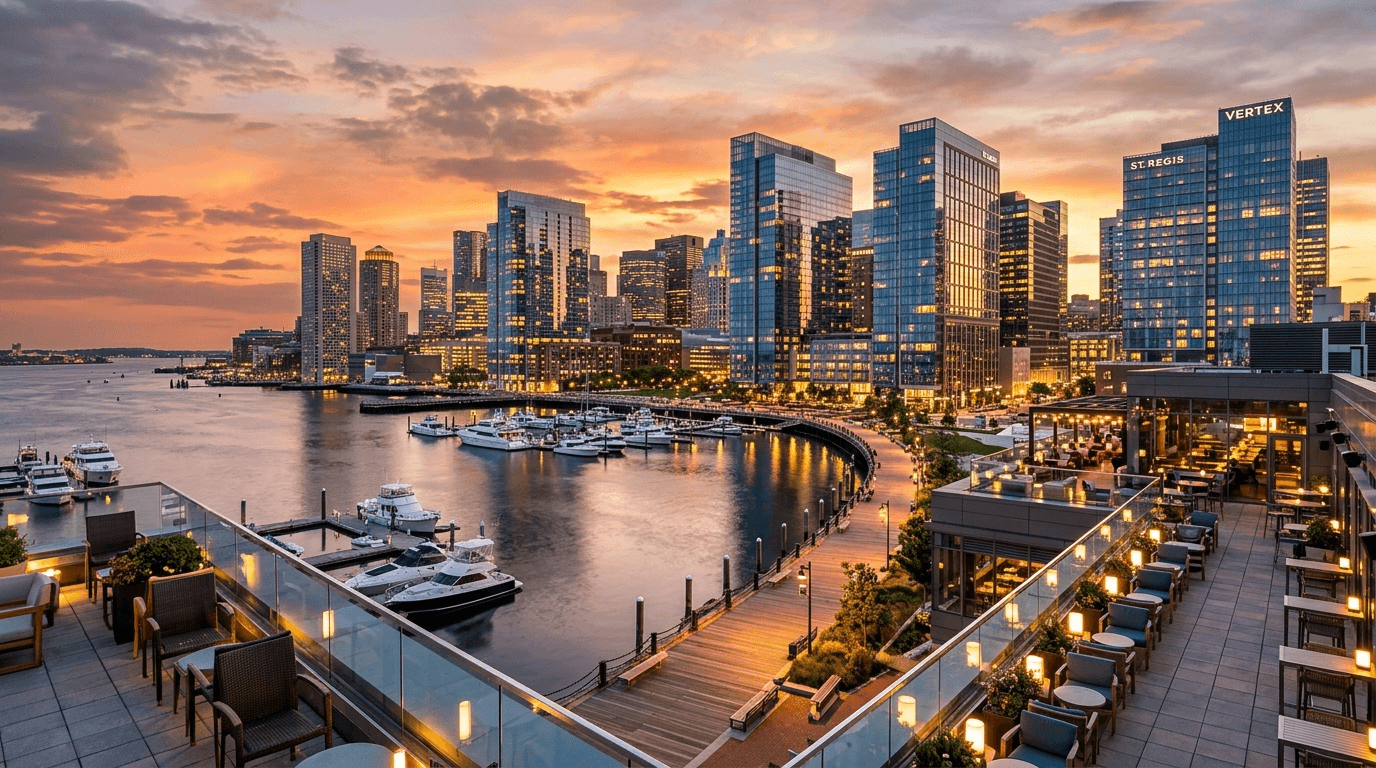
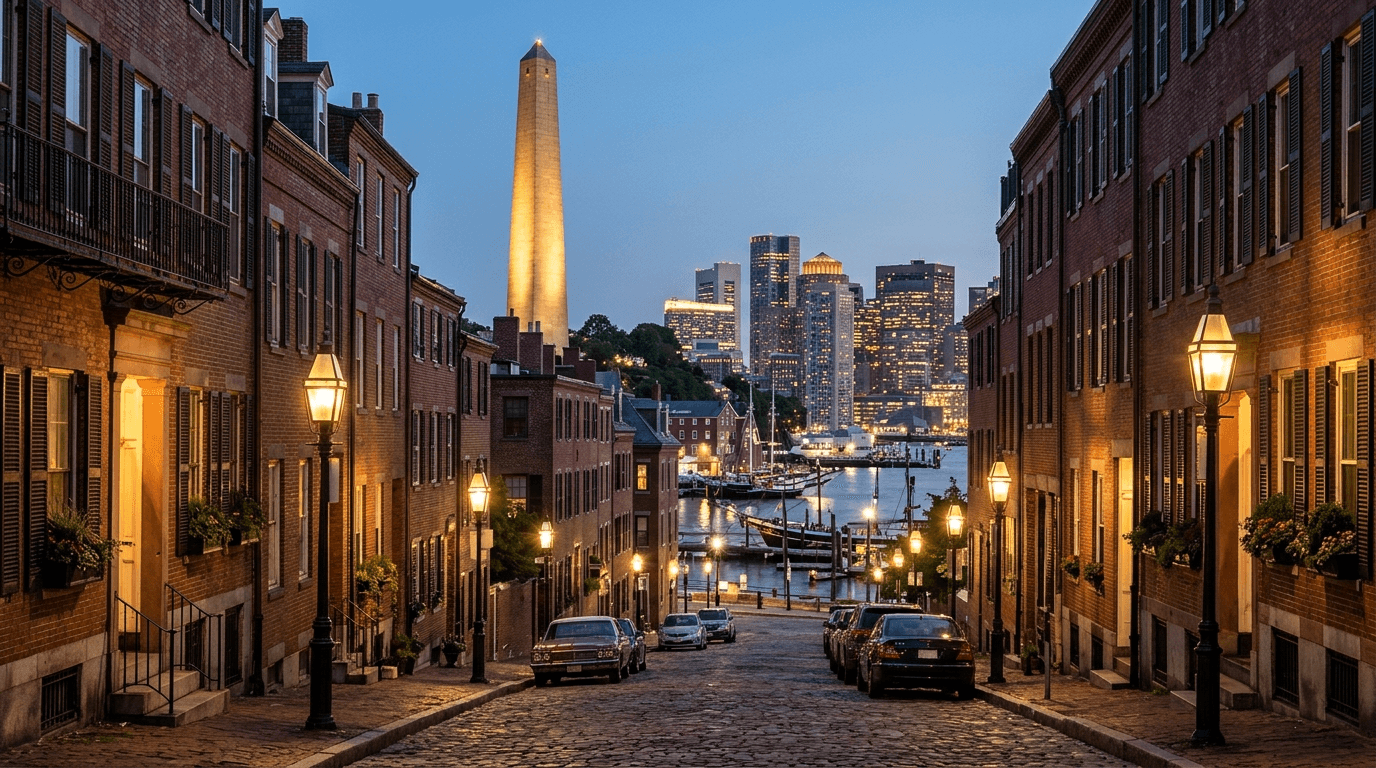
The North End is Boston's oldest residential neighborhood, and one of its most compact. Packed into roughly a third of a square mile are brick walk-ups, espresso bars, centuries-old churches and a waterfront park, all within a short walk of the Financial District. Our office at 90 Canal Street sits just a few blocks away, so these streets are familiar ground for us. The young professionals we work with usually arrive with the same three questions: What does daily life actually feel like? What will my money buy? How easy is it to get to work? This guide answers each one.
What Is It Like to Live in the North End as a Young Professional?
The North End is busy, walkable and social. It's a natural fit for people who want restaurants, cafés and the office within a few minutes' walk, and who are willing to accept some noise and foot traffic in return.
Is the North End quiet or busy?
Busy, particularly on the main streets. Hanover Street is the neighborhood's central thoroughfare, and tourist traffic peaks at dinnertime on weeknights and all day on weekends. Step onto the side streets and alleys, though, and things quiet down considerably. Plenty of residents sleep soundly in small back-street units while Hanover sits a two-minute walk away.
The North End is also one of Boston's most densely populated neighborhoods, with about 43,989 people per square mile. That density is exactly what makes it so convenient. Groceries, pastry, prosciutto, a pharmacy and a workout class are often all within a few blocks of one another.
What makes the North End's atmosphere different from other Boston neighborhoods?
•Historic charm with modern energy. The Freedom Trail runs right through the neighborhood. Just a few doors from 18th-century landmarks, you'll find a sushi spot, a smoothie shop or a Cambodian restaurant sharing the block with longstanding Italian institutions.
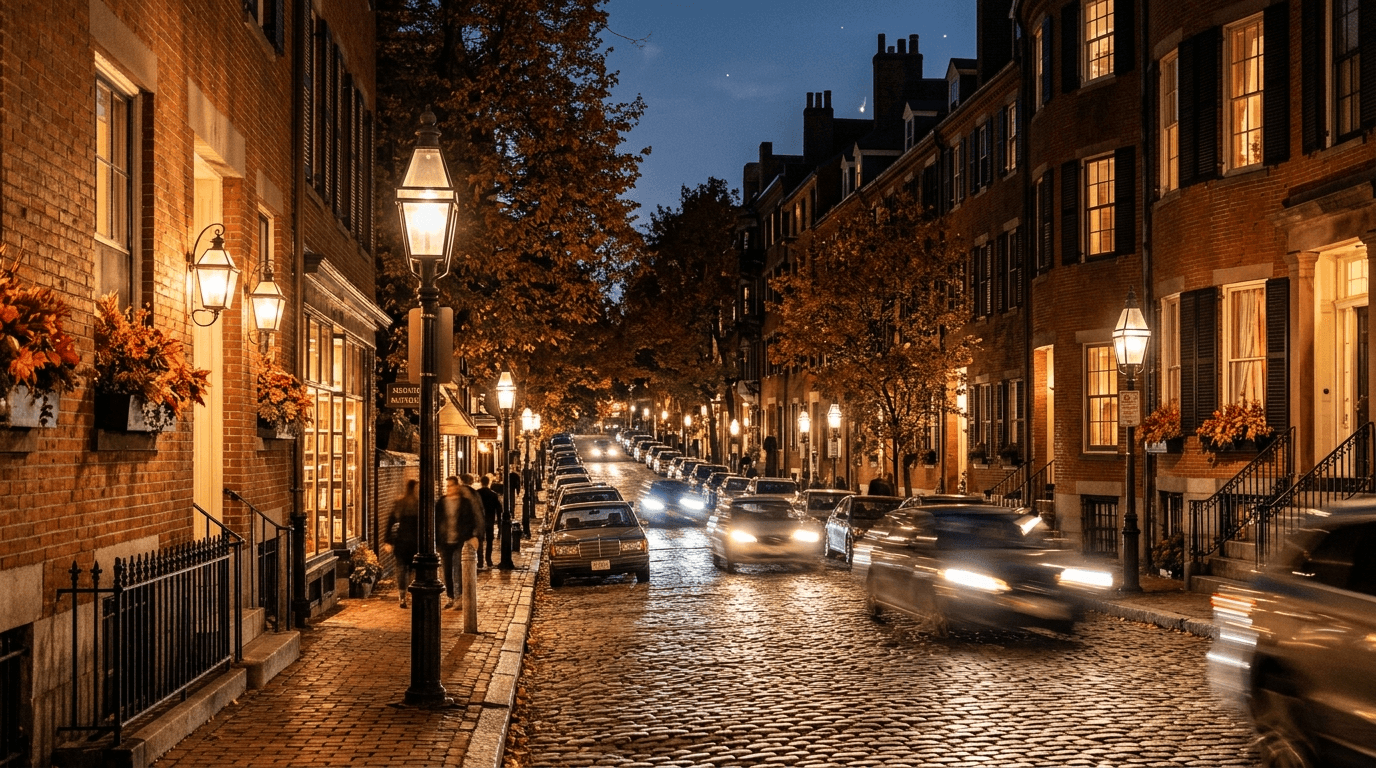
•A strong community identity. Longtime families, summer feast processions and neighbors who know one another give the area a village feel, even with tourists streaming through. One resident on Reddit summed it up as "convenient to everything." The same resident mentioned the "cannon fire every morning" from across the harbor, a quirk that has become part of the local character.
•Safety. The North End holds an "A" safety grade and ranks as safer than 87% of Boston neighborhoods. For many first-time city buyers, that alone can tip the decision.
One trade-off to know upfront: On Friday nights and summer weekends, you'll be sharing the neighborhood with visitors. Most residents take it in stride, and many genuinely enjoy the energy.
What Are Condos and Townhomes Like in the North End?
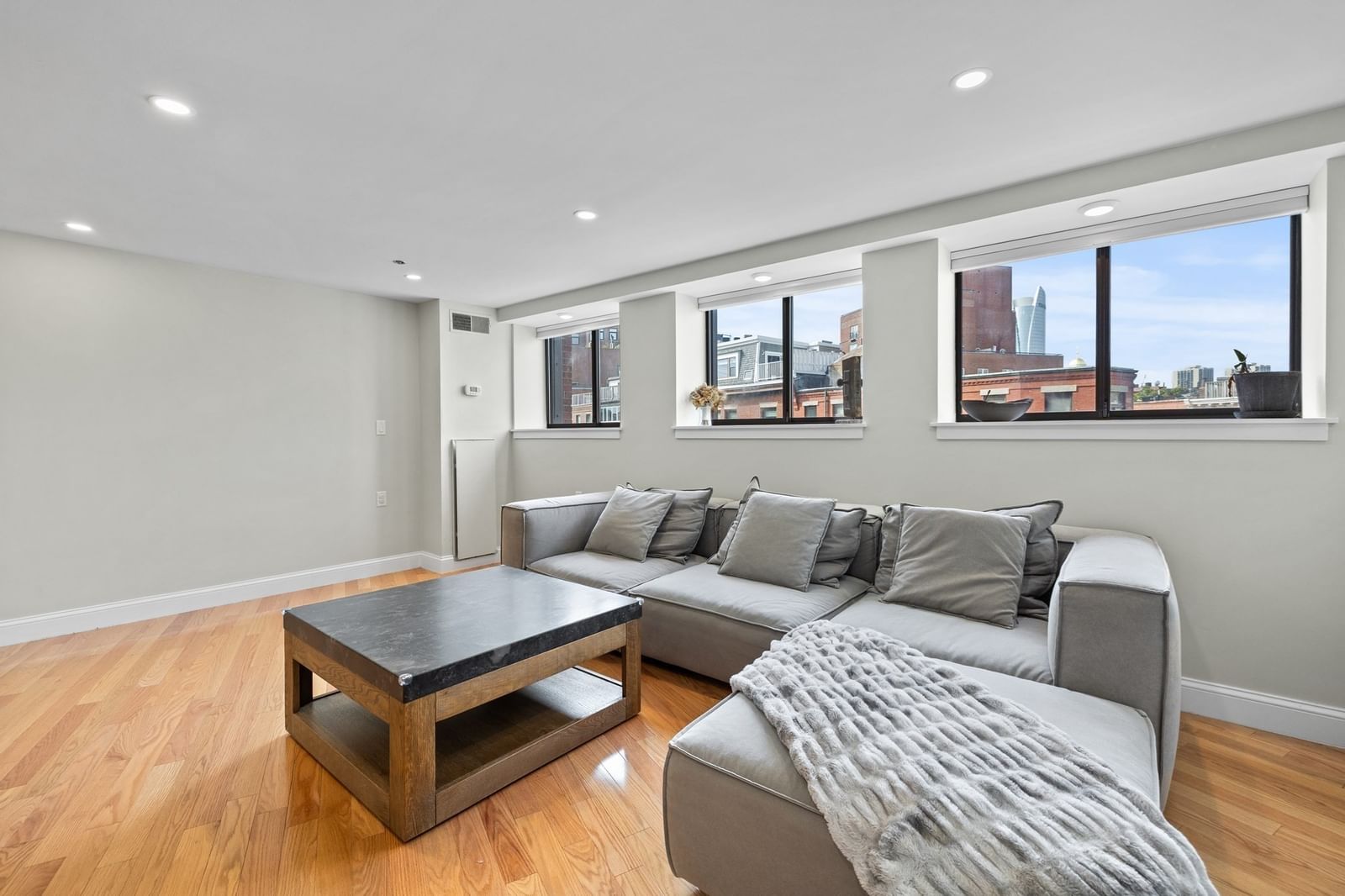
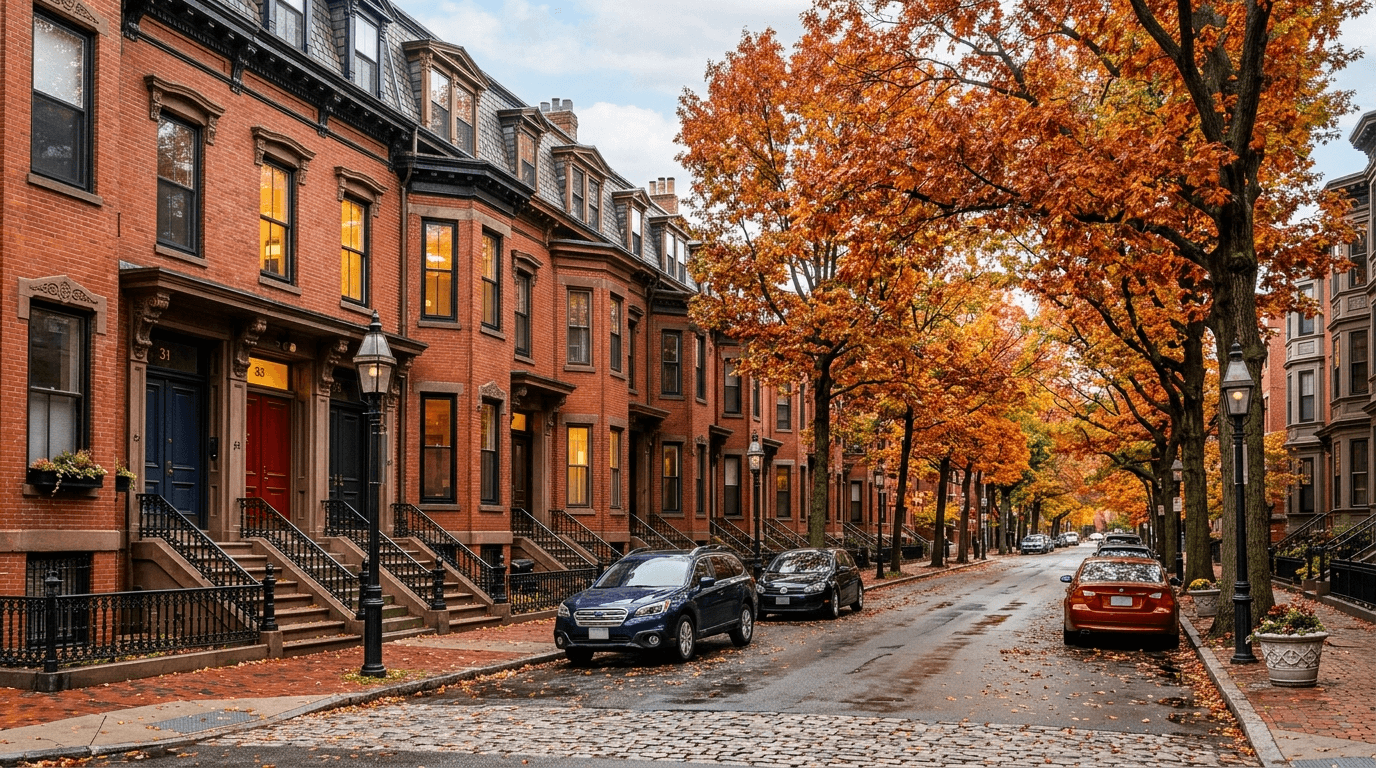
Most North End housing consists of 19th-century brick row buildings and walk-ups that have been converted into condos. Units tend to be compact, and true single-family townhouses rarely come to market.
What architectural styles will I see in the North End?
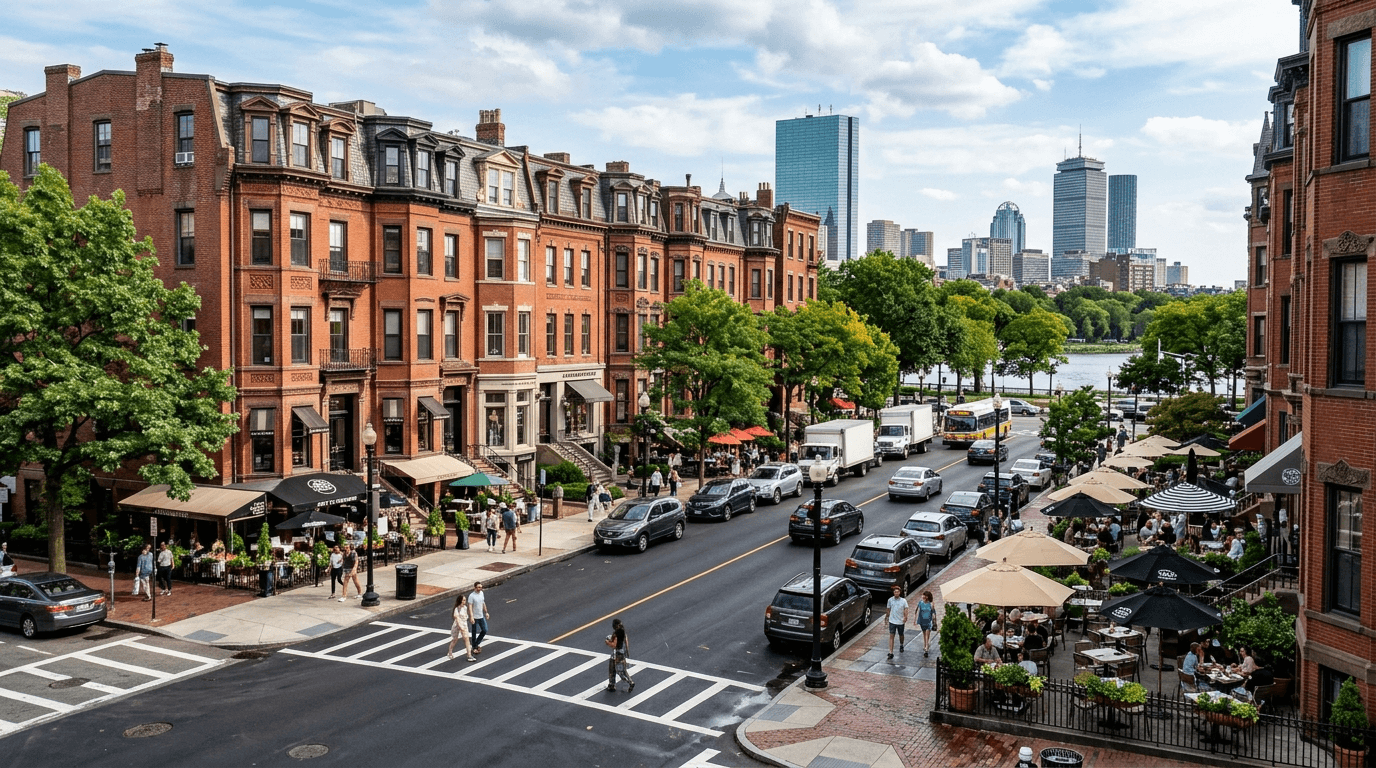
The streetscape is dominated by four- and five-story brick buildings. Expect to see:
•Classic brick walk-ups. Former tenement and row buildings, now divided into condos and rentals.
•Exposed brick and original details inside, frequently paired with high-end renovated kitchens and baths.
•Penthouse conversions. Top-floor units with private roof decks, which sit at the luxury end of the market.
Boston's Article 54 zoning protects the neighborhood's historic character. Facade alterations over 200 sq ft trigger design review, roof decks are limited to 1 foot above the roof surface, and access hatches can be no taller than 30 inches. These rules help explain why the skyline looks much as it did a century ago. They also explain why a legal, existing roof deck adds real value to a unit.
How big are North End condos and apartments?
Layouts are efficient. Typical apartments run 500–700 sq ft, and many sit on the 4th or 5th floor. Recent listings illustrate the range:
Data Table
Example Listing
Size
Asking Price
38A Charter St #7
414 sq ft
$499,000
471 Hanover St #2
664 sq ft
$865,000
43 Stillman St #PH
1,976 sq ft
$2,300,000
When we tour North End units with buyers, finishes aren't the first thing we look at. We start with what's missing. Elevators are rare, and older buildings often lack in-unit laundry, central A/C and dishwashers. A renovated unit with all three can command a noticeable premium over the same square footage in an unrenovated building down the block.
What does the North End housing market look like in late 2026?
North End condos have held their value well. Heading into November 2026, buyer activity has been balanced rather than frenzied, and units that are well priced and well presented still sell. Because unit sizes vary so widely, price per square foot is the most useful yardstick. Published neighborhood market summaries (not primary MLS data) place North End condo pricing at roughly $1,090 per sq ft in late 2026, modestly above 2025 levels. The snapshot below, compiled from a local brokerage's neighborhood page, shows $1,093/sq ft. Figures vary slightly depending on the source and the period measured.
North End Market Snapshot: Late 2026
Headline buyer and renter metrics for the North End, highlighting the premium urban-village market young professionals are weighing in late 2026.
Looking ahead, local forecasts generally call for modest continued price growth through 2027, assuming mortgage rates hover near 6.5%.
Run the monthly numbers before you start shopping. On a typical 850 sq ft condo priced around $923K with 20% down, principal and interest comes to roughly $4,927/month at a 7.03% fixed rate. At 6.5%, that falls to about $4,667. Condo fees, taxes and insurance come on top of those figures.
Is renting in the North End a better starting point?
For many young professionals, it is. Here are average asking rents across October 2026 listings:
•Studio:$2,600
•1-bedroom:$3,445
•2-bedroom:$3,900
•Room in a shared unit:$1,530
Keep in mind that these are averages of current asking prices, which skew toward newly renovated units. Median figures from other sources tell a somewhat different story. The snapshot above shows a median rent of $3,515/mo across all unit sizes, while the chart below puts the North End's median 1-bedroom rent at $2,678. By that median 1-bedroom measure, the North End holds up well against Boston's other central neighborhoods, coming in below Seaport, the South End, Back Bay, South Boston, Fenway-Kenmore and Charlestown.
Median 1BR Rent Across Young-Professional Boston Neighborhoods
The North End sits below Seaport, South End, Back Bay, South Boston, Fenway-Kenmore, and Charlestown on median 1-bedroom rent, making it comparatively attainable among Boston’s most central lifestyle neighborhoods.
The North End sits below Seaport, South End, Back Bay, South Boston, Fenway-Kenmore, and Charlestown on median 1-bedroom rent, making it comparatively attainable among Boston’s most central lifestyle neighborhoods.
One due-diligence item: About 48% of North End properties face severe flood risk over the next 30 years, concentrated mainly near the harbor. Before you commit, ask about flood insurance and the building's flood history, particularly for garden-level units.
Where Do People Gather in the North End?
Social life revolves around Hanover and Salem Streets, the Paul Revere Mall and the waterfront. For many residents, these spaces function as an extension of their living room.
What are the main social hubs in the North End?
•Hanover Street and Salem Street. The neighborhood's two main food streets. Hanover is home to the well-known restaurants and pastry counters, while Salem leans toward the shops, butchers and smaller trattorias that locals rely on day to day.
•The Paul Revere Mall(the Prado). This brick plaza links Hanover Street to the Old North Church. Residents use it for morning coffee, lunch breaks and people-watching.
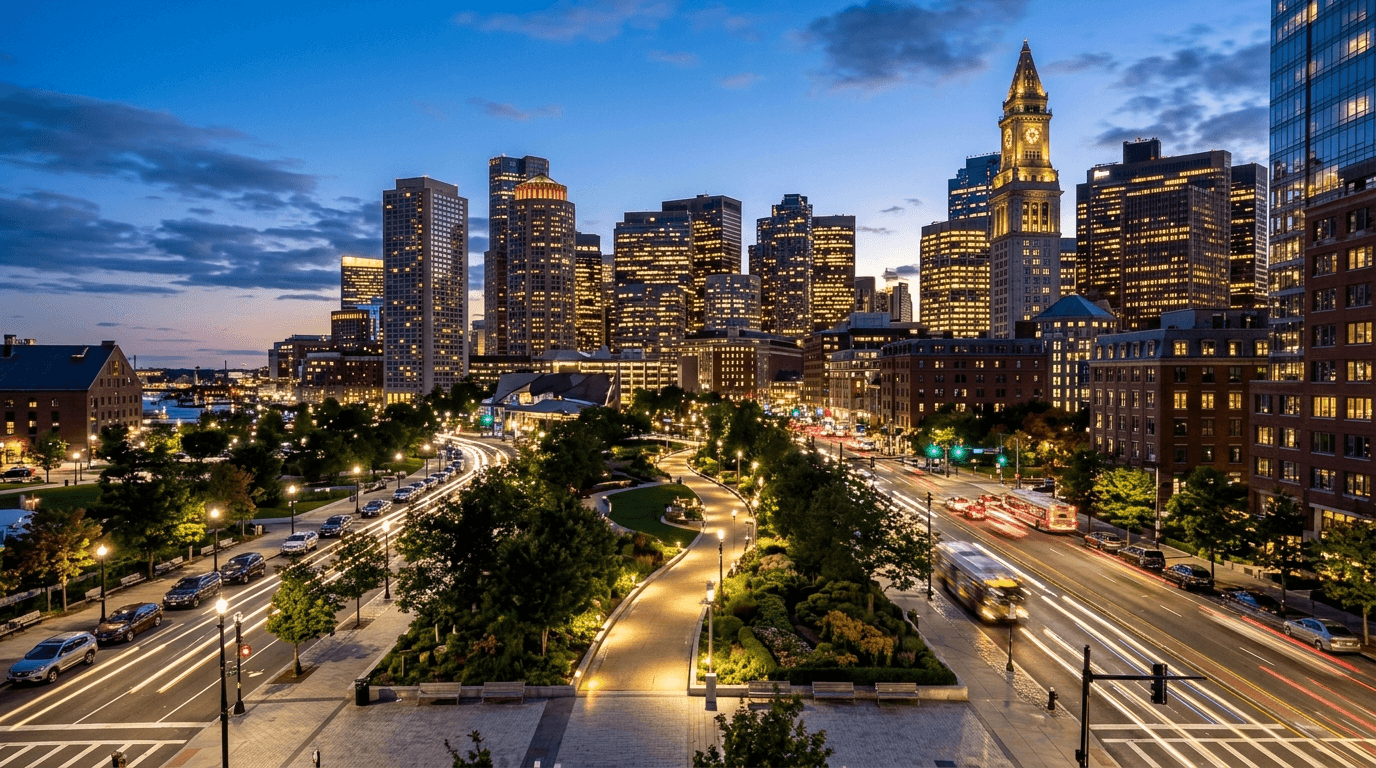
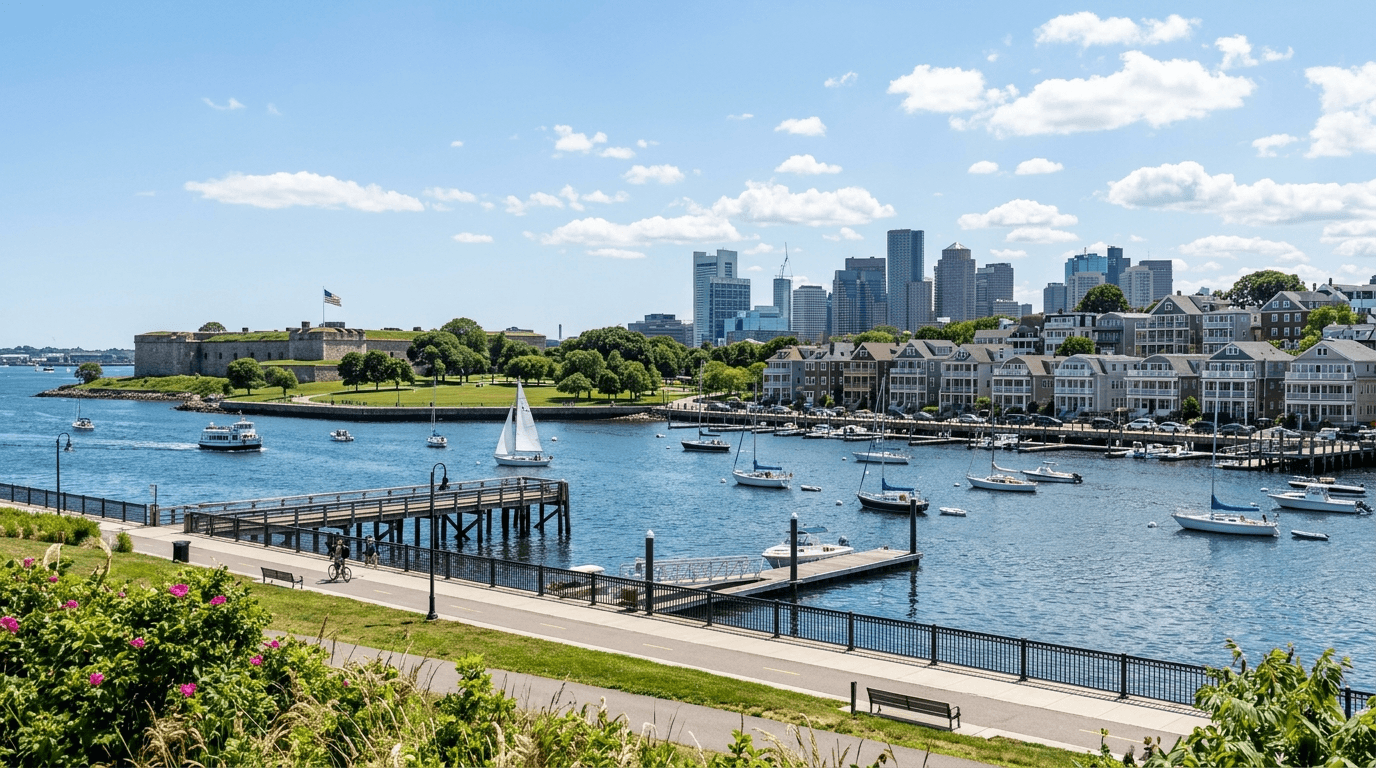
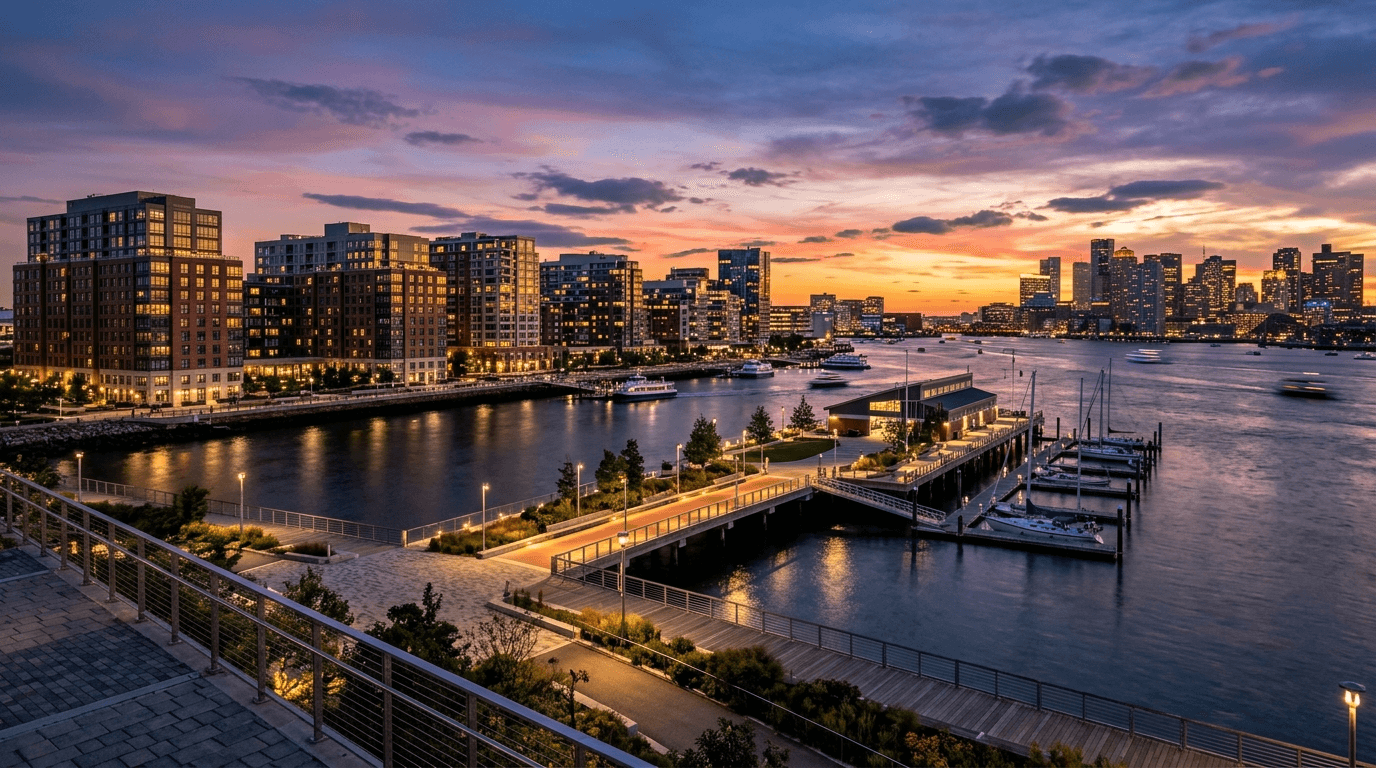
•Christopher Columbus Waterfront Park. The neighborhood's harborfront green space, complete with a rose garden, open lawns and direct access to the Boston Harborwalk for runs and evening strolls.
•Neighborhood parks and playgrounds, including Copp's Hill Terrace, Polcari Playground and DeFilippo Playground. These pockets of open space often come as a pleasant surprise to newcomers.
Where do North End locals get coffee, pastries and workouts?
The morning espresso ritual is woven into daily life here. Old-world spots like Caffe Vittoria still fill with neighbors standing at the bar before work. Beyond the famous cannoli lines, you'll find artisan bakeries, boutique fitness studios and Improv Asylum, a roughly 200-seat comedy venue that makes for a dependable weeknight outing.
How Is the Commute From the North End to Downtown Boston and Beyond?
Few Boston neighborhoods offer an easier commute. Many residents walk to the Financial District in 10–15 minutes, and four MBTA lines plus Commuter Rail are a short walk away.
North End Transportation Scores
Near-perfect walk and transit scores, plus a strong bike score, capture why the North End appeals to car-light or car-free young professionals.
Near-perfect walk and transit scores, plus a strong bike score, capture why the North End appeals to car-light or car-free young professionals.
City Hall, Back Bay, Logan Airport via the Blue Line
State Street
Blue, Orange
Financial District, Airport
Park Street and the Red Line, your route to Cambridge and Kendall, are about a 10–20 minute walk depending on where you live. Most people transfer at Government Center or Downtown Crossing instead.
How does the North End commute compare with other Boston neighborhoods?
The North End's mean commute of 24 minutes is roughly on par with Back Bay and Seaport, and noticeably shorter than South Boston (30 min) and Allston (33 min).
Mean Commute Times in Young-Professional Neighborhoods
With a reported 24-minute mean commute, the North End is competitive with Back Bay and Seaport/Fort Point while staying notably shorter than South Boston and Allston.
With a reported 24-minute mean commute, the North End is competitive with Back Bay and Seaport/Fort Point while staying notably shorter than South Boston and Allston.
Most young professionals here get by without one. Street parking is very difficult, and dedicated garage spaces are both scarce and expensive. If you do drive, though, getting out of the city is fast:
•I-93 runs right along the neighborhood's edge for north–south trips.
•Route 1 via the Tobin Bridge leads to the North Shore.
•Logan Airport is a quick drive through the Sumner/Callahan tunnels, or a short Blue Line ride from Government Center or State.
Is the North End Right for You?
If you want a walkable, social, historic neighborhood and can live comfortably in a smaller footprint, the North End is a strong choice. It pairs a near-perfect 99 Walk Score with a short commute and rents that are relatively accessible for such a central location.
When we walk buyers through the neighborhood, the right fit usually hinges on a few trade-offs:
•Which street you're on: lively Hanover or a quiet side alley.
•Which floor you're on, since a fifth-floor walk-up means plenty of stairs.
•Which conveniences you're willing to give up for historic character.
We're glad to help you weigh those choices on the ground, block by block.
Is the North End in Boston, MA a good place to live for young professionals?
Yes. The North End is busy, walkable, and social, with restaurants, cafés, groceries, fitness options, and the Financial District within a short walk. It is best for people who want a compact urban neighborhood and are comfortable with noise and foot traffic, especially near Hanover Street.
Is the North End in Boston, MA a good fit for families?
The North End has an "A" safety grade and ranks safer than 87% of Boston neighborhoods, which is a major advantage for city living. Families also have access to outdoor spaces such as Christopher Columbus Waterfront Park, Copp's Hill Terrace, Polcari Playground, and DeFilippo Playground. The main tradeoffs are compact housing, tourist activity, and older walk-up buildings.
What are condos and townhomes like in the North End, Boston, MA?
Most North End housing consists of 19th-century brick row buildings and walk-ups that have been converted into condos. True single-family townhomes are rare. Many units are compact, often 500–700 square feet, and elevators, in-unit laundry, central A/C, and dishwashers are often absent in older buildings.
How much do condos cost in the North End, Boston, MA?
North End condo pricing was roughly $1,090 per square foot in late 2026, with published neighborhood summaries showing about $1,093 per square foot. Recent examples ranged from a 414-square-foot unit listed at $499,000 to a 1,976-square-foot penthouse listed at $2.3 million. A typical 850-square-foot condo around $923,000 would have estimated principal and interest near $4,927 per month at a 7.03% fixed rate with 20% down, before condo fees, taxes, and insurance.
Are HOA or condo fees important when buying in the North End, Boston, MA?
Yes. Monthly ownership costs in the North End should be evaluated beyond the mortgage payment because condo fees, taxes, and insurance are additional expenses. Buyers should also ask about flood insurance and building flood history, especially near the harbor or for garden-level units, since about 48% of North End properties face severe flood risk over the next 30 years.
How is the commute from the North End in Boston, MA?
Commuting from the North End is one of the neighborhood's strongest advantages. Many residents walk to the Financial District in 10–15 minutes, and Haymarket, North Station, Government Center, and State Street provide access to the Orange, Green, Blue, Commuter Rail, and Amtrak Downeaster services. The average commute is about 24 minutes.
Do you need a car in the North End, Boston, MA?
Most young professionals in the North End do not own a car because the neighborhood is highly walkable and transit-rich. Street parking is very difficult, and dedicated garage spaces are scarce and expensive. For drivers, I-93, Route 1 via the Tobin Bridge, and Logan Airport access are close by.
What should families know about schools in the North End, Boston, MA?
Specific school ratings and assignment details are not established by the North End housing facts available here, so families should verify Boston Public Schools assignment information before choosing a home. For daily logistics, the neighborhood offers strong walkability, nearby playgrounds, waterfront open space, and a high safety grade, but many homes are smaller walk-up condos rather than larger family-style properties.
Why work with Beacon & Bond Group in North End, Boston?
Beacon & Bond Group helps buyers and sellers in Boston, Brookline, Newton, Needham, Dedham and Milton. More than 80 clients served since 2020. Let's talk about your plans. Track record — Experience: 16+ Years; Sales Volume: $85M+; Transaction Count: 90+. Call (857) 260-7924 or send a message through the contact page.