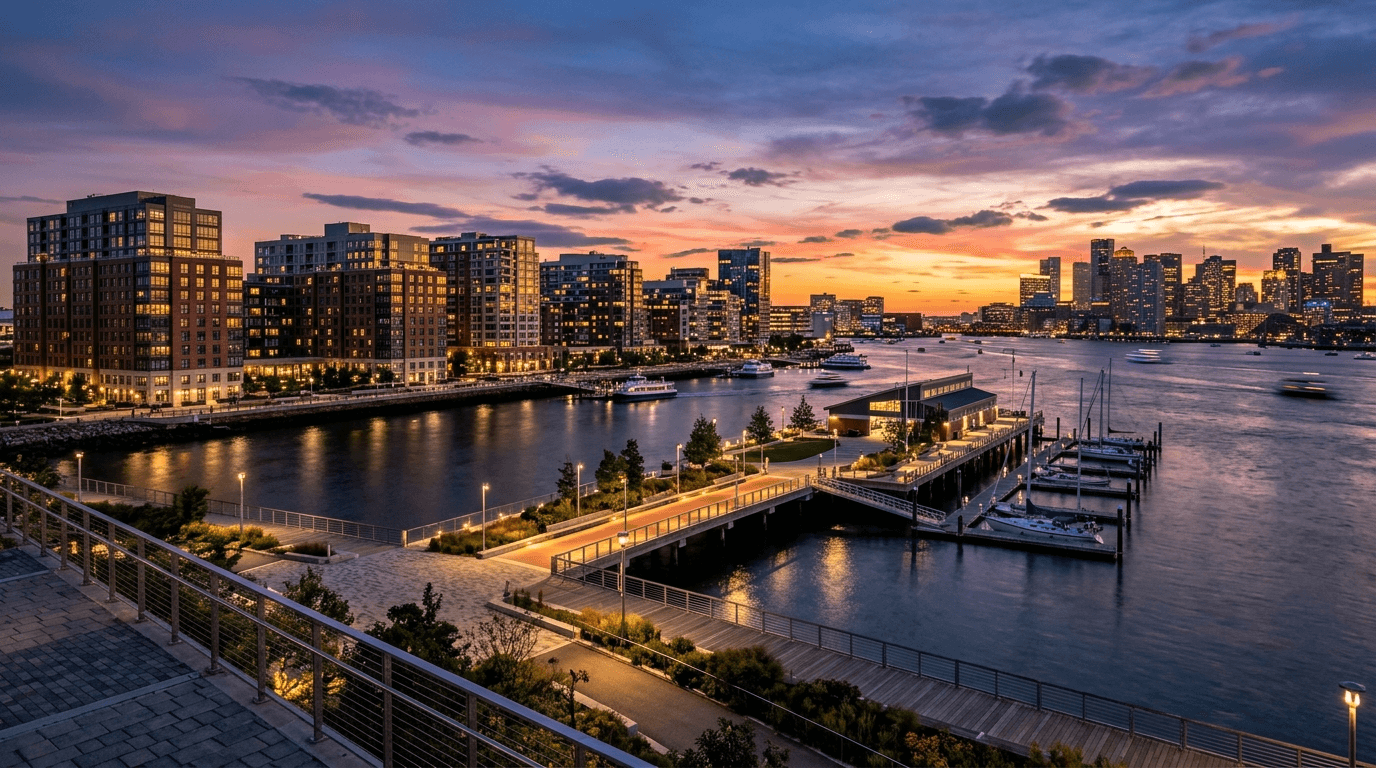
Living in the Seaport District: An Essential Guide to Boston’s Luxury Waterfront Lifestyle
Explore Seaport’s high-energy waterfront vibe: Silver Line access, $2,323 median HOA fees, rooftop nightlife, ICA, Harborwalk and luxury condos.
Written ByTyler Smith
PublishedNovember 5, 2026
Beacon & Bond Group helps buyers and sellers in Boston, Brookline, Newton, Needham, Dedham and Milton. More than 80 clients served since 2020. Let's talk about your plans. Serving Boston, Brookline, Newton, Dedham, Needham and Milton, MA.
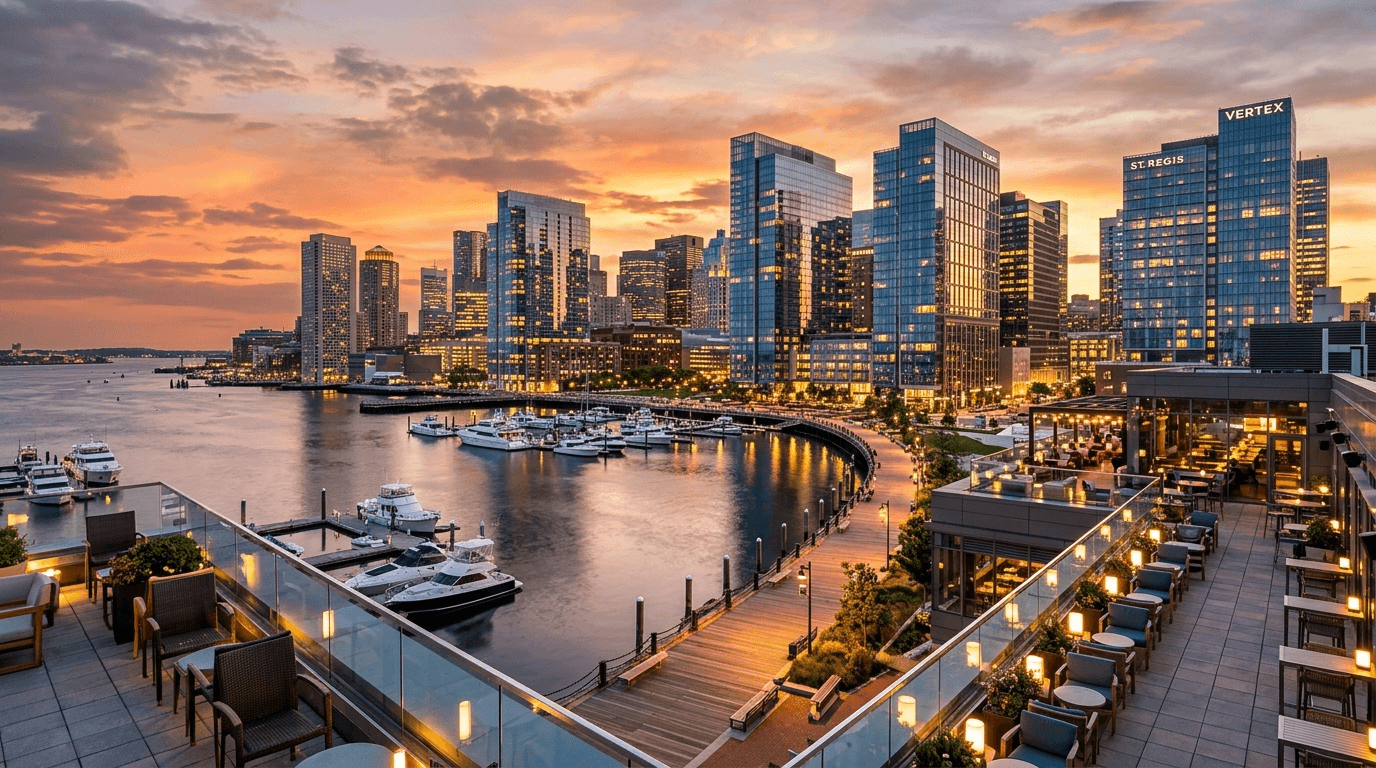
The Seaport District is Boston's newest neighborhood, built almost entirely within the last two decades on filled land along the South Boston waterfront. For young professionals, the appeal is easy to see: glass towers, harbor views, rooftop bars and a walkable live-work-play setup that few other parts of the city can match. It also comes with some of Boston's highest housing costs. This guide walks through what daily life, housing, gathering spots and commuting really look like here, so you can decide whether the Seaport fits your plans and your budget.
What Is It Like to Live in the Seaport District?
The Seaport District is busy, modern and social. It suits young professionals who want waterfront dining, nightlife and an office within walking distance. Quiet it is not. Expect active sidewalks, event crowds and a steady stream of visitors, especially from spring through fall.
Is the Seaport District busy or quiet?
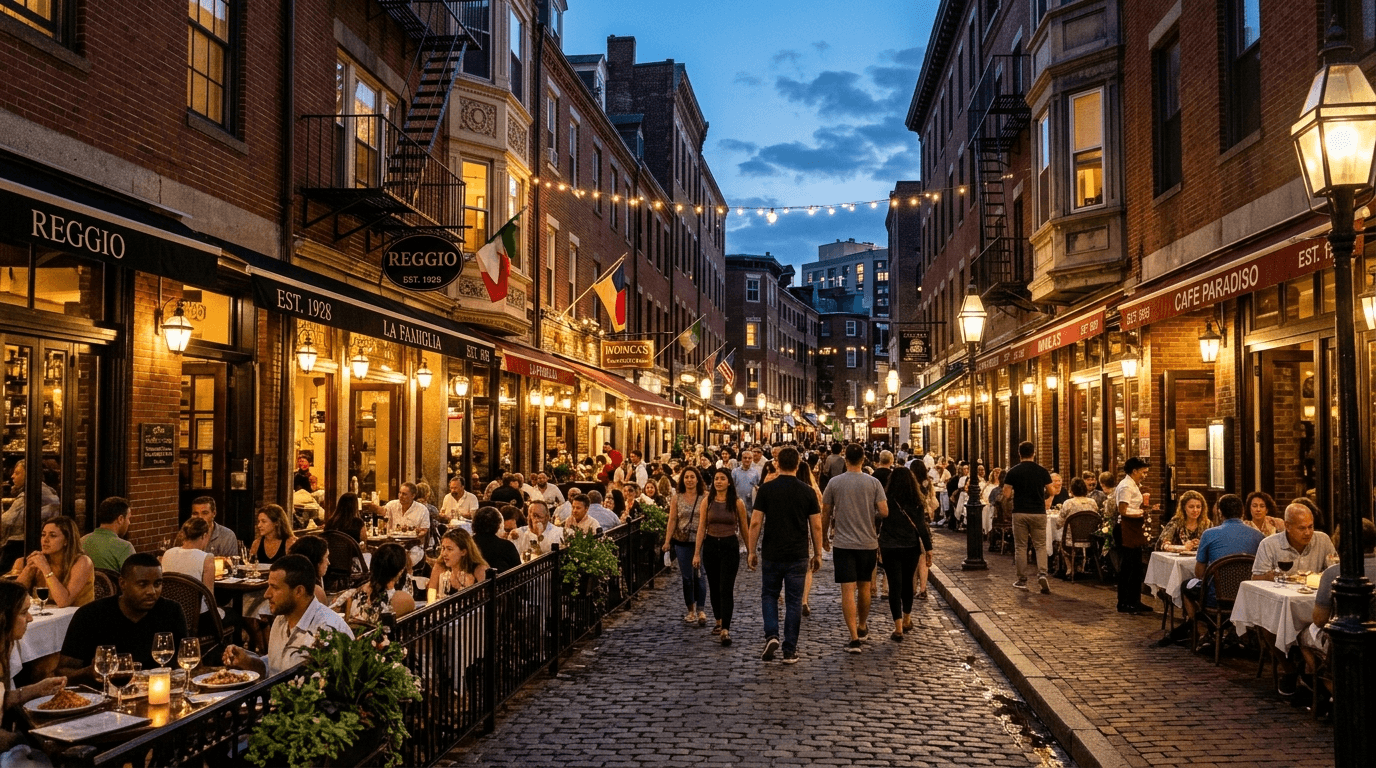
Busy, without question. On a summer weeknight, the Harborwalk fills with runners and after-work crowds, and rooftop patios stay packed well past sunset. Weekends draw visitors from across the region for concerts, pop-up markets and harbor cruises. Winter slows things down, but the core blocks around Seaport Boulevard stay lively year-round because so many people live and work within a few blocks of each other.
The safety profile is what you'd expect from a central urban district. Foot traffic is heavy, and the nightlife areas pick up after dark. Many buyers see that constant energy as a plus. If you're picturing tree-lined streets and front stoops, though, you'll probably be happier elsewhere.
What is the social and nightlife scene like in the Seaport District?
For people in their 20s and 30s, it's one of the strongest scenes in Boston. Neighborhood comparisons for 2026 describe Seaport dining as "diverse, high-quality, newer" and its nightlife as "strong, rooftops and events." The North End's nightlife, by contrast, is rated "moderate," and Charlestown's is rated "quiet."
Social life here tends to revolve around a few settings:
•Waterfront dining along Fan Pier and Seaport Boulevard
•Rooftop lounges in the newer towers and hotels
•Seasonal outdoor venues with lawn games, fire pits and live music
•After-work happy hours that start in the office buildings and spill onto the sidewalks
Who typically moves to the Seaport District?
The neighborhood mostly attracts tech, finance, biotech and creative professionals, many of whom work for companies that have moved their headquarters into the Seaport and the neighboring Innovation District. When we tour buildings here with buyers, the reason they give most often is refreshingly simple: they want to walk to work and walk to dinner, no car required.
The trade-off is community depth. The same 2026 comparison rates the Seaport's neighborhood feel as "still developing," while the North End and Charlestown both earn "very strong." Long-standing neighborhood institutions are still taking shape here. For some buyers that's a dealbreaker; for others it barely registers.
Here's how the Seaport stacks up against two other walkable neighborhoods young professionals often consider:
Young Professional Neighborhood Fit: North End vs. Seaport vs. Charlestown
A lifestyle-first comparison of three walkable Boston neighborhoods, emphasizing transit access, nightlife, dining, car dependence, and typical rents.
What Are Condos and Townhomes Like in the Seaport District?
Nearly all Seaport housing is in condo and rental buildings. Most are high-rise and mid-rise towers wrapped in floor-to-ceiling glass, along with some loft-style units in converted warehouses near Fort Point. Single-family homes are extremely rare. Traditional "lot sizes" don't really apply, because what you're buying is square footage and amenities, not land.
What architectural styles are common in the Seaport District?
Seaport housing falls into three main categories:
1. Glass high-rise condo towers. The dominant style, offering sweeping skyline and harbor views, open floor plans and modern finishes.
2. Industrial loft conversions. Found mostly along the Fort Point Channel, these feature exposed brick, timber beams and tall ceilings, often paired with updated kitchens and baths.
3. Luxury rental buildings. A large share of the inventory, and a common first step for professionals who want to test the neighborhood before buying.
Townhome-style units are scarce. When they do appear, they're usually duplex or ground-floor units with private entrances inside larger buildings, not standalone rowhouses. If you want a true townhouse on its own lot, South Boston or the South End is generally the better hunting ground.
Do Seaport District buildings have a lot of amenities?
They do. Many Seaport buildings are full-service residences, and the luxury high-rises commonly offer:
•24/7 concierge services
•Garage parking, though spaces are limited and often billed separately
•In-unit laundry
•Rooftop decks, fitness centers and, in many towers, pools and resident lounges
•Marina access in select waterfront buildings
These amenities are a big reason buyers choose the Seaport over Boston's historic neighborhoods. They're also the main reason monthly carrying costs run so high.
How expensive is it to buy a condo in the Seaport District?
On a per-square-foot basis, the Seaport ranks among Boston's most expensive neighborhoods. Its market sits firmly in the luxury tier. Luxury one-bedrooms generally start in the high six figures and can climb past $1M in premium buildings.
Pricing at the top end has held up well. According to figures published by the brokerage Andrew Goldberg Advisory (not MLS data), the overall Seaport condo sale price dipped from roughly $2.0M in 2021 to about $1.9M in 2022, then rebounded to about $2.4M in 2023 and $2.6M in 2024 and 2025. The source doesn't specify whether these are medians or averages. Either way, they reflect all sales, so large luxury penthouses and multi-bedroom units push the figure well above what a typical one-bedroom costs:
Seaport Condo Sale Price Trend, 2021–2025
A five-year view of Seaport condo sale prices, showing a rebound after 2022 and continued high-end momentum through 2025.
A five-year view of Seaport condo sale prices, showing a rebound after 2022 and continued high-end momentum through 2025.
As of late 2026, local brokerages report that buyers have more room to negotiate than they did a few years ago. Homes are taking longer to sell, and well-prepared buyers may have more leverage on terms.
That's especially relevant for first-time buyers. With more supply on the market, it can pay to ask for seller concessions, closing-cost credits or a longer inspection window, rather than focusing only on the headline price.
What do HOA fees typically look like in Seaport District condos?
Seaport condo fees are among the highest in Boston. An analysis of active listings in October 2026 put the Seaport's median monthly fee at $2,323, or $1.85 per square foot. Back Bay came in at $1,502, or $1.02 per square foot. For context, the Boston metro median HOA fee is just $386.
The gap is widest in the price ranges young professionals usually shop:
Monthly Condo Fees: Back Bay vs. Seaport by Price Tier
A practical carrying-cost comparison for condo buyers: Seaport fees are higher in the under-$1M and $1M–$3M tiers, while Back Bay is higher at the $3M+ tier.
Under $1 million
$1 million to $3 million
$3 million and up
A practical carrying-cost comparison for condo buyers: Seaport fees are higher in the under-$1M and $1M–$3M tiers, while Back Bay is higher at the $3M+ tier.
Below $1M, Seaport units average $838 per month, compared with $510 in Back Bay. Between $1M and $3M, the Seaport median climbs to $1,969 per month. Full-service towers with 24-hour staff, pools and gyms typically run $1.50 to $2.20 per square foot, while hotel-branded residences start at $2.00 per square foot and go up from there.
When we review condo documents with buyers, we look beyond the fee itself and focus on four things:
•Reserve health. A reserve study funded at 70% or better is healthy. Anything below 30% is a red flag. For towers with elevators and garages, a reserve balance under $15,000 per unit is a warning sign.
•Special assessment history. Common assessments in Boston range from $5,000 to $25,000 per unit.
•Lending rule changes. Fannie Mae's minimum reserve allocation is scheduled to rise from 10% to 15% in January 2027. Buildings that fall short could become harder to finance.
•Parking. Confirm whether a space is deeded, leased or simply unavailable.
Should I rent or buy in the Seaport District?
It mostly comes down to how long you plan to stay. Typical 2026 rents run $3,600 to $4,300 for a one-bedroom and $4,800 to $5,800 for a two-bedroom, noticeably higher than in the North End or Charlestown.
Owner-occupants can claim Boston's residential exemption, which saves about $4,354 per year on the property tax bill at the FY2026 rate of $12.40 per $1,000. If your horizon is under three years, renting first is often the smarter way to get to know the neighborhood. If you're planning to stay longer, condo fees are the number to model most carefully before you buy.
Where Do People Gather in the Seaport District?
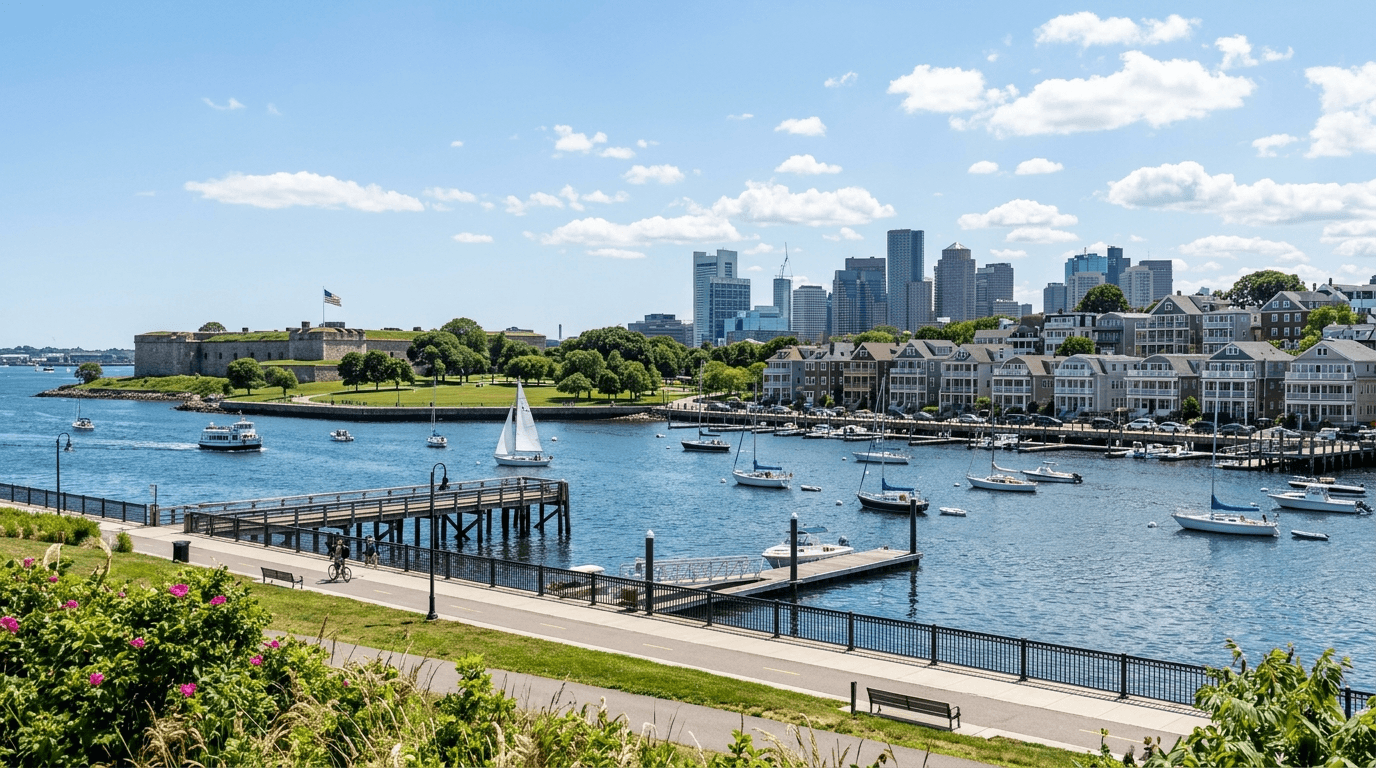
Seaport residents spend most of their free time along the waterfront. The main gathering spots are the Harborwalk, Fan Pier Park, the event lawns on D Street and the restaurant corridor along Seaport Boulevard. Cultural anchors like the Institute of Contemporary Art round things out.
What are the best outdoor spaces in the Seaport District?
•The Boston Harborwalk is the neighborhood's main outdoor route for morning runs, evening strolls and bike rides with harbor views.
•Fan Pier Park offers lawns and seating that face the downtown skyline, making it a favorite lunch spot for office workers.
•Martin's Park is a waterfront park along the Fort Point Channel.
•South Boston Maritime Park is a quieter, landscaped green space near the convention center, and residents often use it as a break from the busier Boulevard blocks.
Green space is limited compared with neighborhoods near the Common or the Esplanade. If a big park matters to you, factor that in.
What are the most popular hangout spots in the Seaport District?
Seaport Boulevard is the neighborhood's shopping and dining spine, lined with flagship retail, The Current pop-up village and seven monumental sculptures along the promenade.
A few blocks inland, the Lawn on D is the area's signature seasonal gathering space. With illuminated swings, lawn games, cocktails and live events, it becomes an outdoor living room for residents from spring through fall.
Everyday errands are easy, too. Most residents rely on grocery stores and pharmacies within walking distance, and few people here plan their weeks around a car trip to the supermarket.
What cultural attractions are in the Seaport District?
The Institute of Contemporary Art (ICA) is the neighborhood's cultural landmark. Its building cantilevers dramatically over the harbor, and its waterfront steps double as a casual meeting spot. Public art is woven into daily life as well, from a reproduction of Frank Stella's Damascus Gate (Stretch Variation I) to the sculptures along Seaport Boulevard.
For healthcare, Tufts Medical Center, Massachusetts General Hospital and Boston Medical Center are all close by.
Is the Seaport District good for families?
The Seaport works well for young couples and families with infants. Several well-reviewed daycare centers operate in the neighborhood, many tied to the office buildings. K-12 options within the Seaport itself are limited, however. Families typically look to South Boston and the South End for schools, and many buyers move on as their children approach school age.
How Is the Commute from the Seaport District?
Most Seaport residents get around without a car. The MBTA Silver Line connects the neighborhood to South Station and Logan Airport, and South Station adds Red Line and Commuter Rail access. Add in the Seaport's location right at the I-90 and I-93 interchange, water transit options and plenty of Bluebikes stations, and getting around is about as easy as it gets in Boston.
Which MBTA stations serve the Seaport District?
The Silver Line is the Seaport's rapid-transit backbone, running through underground stations at Courthouse, World Trade Center and Silver Line Way.
•SL1 runs directly to Logan Airport, making the Seaport one of the most convenient neighborhoods in Boston for frequent business travelers.
•SL2 serves the Design Center and the Marine Industrial Park.
•SL3 connects to Chelsea by way of the airport area.
•All routes link to South Station, where riders can transfer to the rest of the network.
One notable upgrade is the additional Courthouse Station entrance on Seaport Boulevard in front of District Hall. With a new stair, elevator and escalator, it improves access for daily commuters and car-free residents alike:
Courthouse Silver Line Entrance Construction
A Seaport transit infrastructure upgrade adding a new station entrance/headhouse on Seaport Boulevard, improving access for commuters and car-light residents.
Construction began in summer 2021, with completion originally projected for late 2025. Before building your daily route around it, check whether the entrance is open on the MBTA website or in the Seaport TMA's news and advisories.
How do I get from the Seaport District to Cambridge or downtown Boston?
South Station is the key transfer point, just a short walk or one Silver Line stop from most Seaport buildings.
•Downtown Boston and the Financial District: Many residents simply walk across the Fort Point Channel bridges.
•Cambridge (Kendall, Central, Harvard): Take the Red Line from South Station.
•Suburban offices and weekend trips:Commuter Rail and Amtrak both depart from South Station.
Is it easy to drive from the Seaport District?
Highway access is excellent. The Mass Pike (I-90) and I-93 both connect at the edge of the neighborhood, and the Ted Williams Tunnel puts Logan Airport just minutes away.
Parking is another matter. It's limited and often billed separately from your unit. Street reconstruction in Fort Point, including work on Sleeper and Congress Streets running weekdays from 7:00 AM to 3:00 PM, can also slow local traffic. Many residents who own cars end up driving them only on weekends.
Are there ferry, water taxi or bike options in the Seaport District?
Yes. Seasonal ferries and private water taxis cross the harbor to the North End, Charlestown and the airport, offering one of the more enjoyable commutes in the city. Bluebikes stations are plentiful throughout the neighborhood, and the Fort Point street upgrades are adding safer bike connections.
Is the Seaport District Right for You?
The Seaport is a strong fit if you prioritize modern housing, walkability, amenities and a lively social scene, and you're comfortable with premium pricing and high monthly fees. It's a weaker fit if you want historic character, a large backyard or a long-established neighborhood identity.
Keep in mind, too, that the neighborhood sits on low-lying filled land exposed to coastal flooding. Ask every building about its flood resilience measures and insurance coverage before you commit.
When buyers weigh the Seaport against Back Bay, the South End or South Boston, we suggest ranking seven factors honestly:
1. Modern housing
2. Walkability
3. Neighborhood character
4. Living space
5. Amenities
6. Green space
7. Monthly carrying costs
If modern housing, walkability and amenities top your list, the Seaport is hard to beat. If carrying costs come first, start by comparing condo fees building by building.
Is the Seaport District in Boston, MA a good place for young professionals?
Yes. The Seaport District is one of Boston’s strongest fits for young professionals who want modern housing, waterfront dining, nightlife, and the ability to walk to work. It is busy and social, with rooftop lounges, after-work happy hours, seasonal events, and active sidewalks throughout much of the year.
Is the Seaport District in Boston, MA good for families?
The Seaport District works best for young couples and families with infants. The neighborhood has several well-reviewed daycare centers, many connected to nearby office buildings, but K-12 options within the Seaport itself are limited. Families often look to South Boston or the South End for schools and may relocate as children approach school age.
What types of condos and townhomes are available in Boston, MA’s Seaport District?
Most Seaport housing is in high-rise and mid-rise condo or rental buildings with modern finishes, floor-to-ceiling glass, and harbor or skyline views. Industrial loft conversions are also found near the Fort Point Channel, with exposed brick, timber beams, and tall ceilings. True townhomes are limited and usually appear as duplex or ground-floor units within larger buildings rather than standalone rowhouses.
How expensive are condos in the Seaport District in Boston, MA?
The Seaport District is among Boston’s most expensive neighborhoods on a price-per-square-foot basis. Luxury one-bedroom condos generally start in the high six figures and can exceed $1 million in premium buildings. Larger luxury units and penthouses push overall sale prices much higher.
How much are HOA fees for Seaport District condos in Boston, MA?
Seaport condo fees are among the highest in Boston. An October 2026 analysis of active listings put the neighborhood’s median monthly HOA fee at $2,323, or $1.85 per square foot, compared with a Boston metro median of $386. Full-service towers with staff, pools, gyms, and other amenities commonly run $1.50 to $2.20 per square foot.
Should I rent or buy in the Seaport District in Boston, MA?
Renting is often the better option if you plan to stay less than three years, especially because one-bedroom rents typically run $3,600 to $4,300 and two-bedroom rents run $4,800 to $5,800. Buying may make more sense for a longer stay, but high condo fees should be modeled carefully. Owner-occupants may also qualify for Boston’s residential exemption, which saves about $4,354 per year at the FY2026 tax rate.
How is the commute from the Seaport District in Boston, MA?
Most Seaport residents can get around without a car. The MBTA Silver Line connects the neighborhood to South Station and Logan Airport, while South Station provides Red Line, Commuter Rail, and Amtrak access. Many residents also walk to downtown Boston and the Financial District across the Fort Point Channel bridges.
Is parking easy in the Seaport District in Boston, MA?
Parking in the Seaport District is limited and often billed separately from a condo or rental unit. Many buildings offer garage parking, but spaces may be deeded, leased, or unavailable depending on the property. Even residents who own cars often use them mainly on weekends because the neighborhood is walkable and well connected by transit.
Why work with Beacon & Bond Group in Seaport District, Boston?
Beacon & Bond Group helps buyers and sellers in Boston, Brookline, Newton, Needham, Dedham and Milton. More than 80 clients served since 2020. Let's talk about your plans. Track record — Experience: 16+ Years; Sales Volume: $85M+; Transaction Count: 90+. Call (857) 260-7924 or send a message through the contact page.